Pricing And Presenting Your Malvern Home
June 25, 2026
June 25, 2026
Wondering why some Malvern homes attract fast interest while others sit longer than expected? If you are getting ready to sell, price and presentation usually explain most of the difference. When you understand how buyers compare homes online and in person, you can make smarter decisions before your listing goes live. Let’s dive in.
Malvern is not a market where broad averages tell the whole story. The borough is compact, with a pedestrian-friendly downtown, SEPTA rail service, bus access, and distinct neighborhood character that can influence value from one block to the next. That means your pricing strategy should reflect your specific location, condition, and features, not just a headline number from a real estate portal.
Public market snapshots can be useful for context, but they are not the pricing engine. Realtor.com’s April 2026 data for Malvern shows 104 homes for sale, a median listing price of $834,000, a median 35 days on market, and a 99% sale-to-list ratio. Zillow’s March 2026 data shows an average home value of $792,706, a median list price of $812,133, 42 homes for sale, and homes going pending in about 14 days.
Those numbers point to an active market, but they also show why pricing needs a closer lens. Even within a small area like Malvern, one home’s value can shift based on lot size, updates, layout, walkability, or proximity to borough amenities. A strong list price should come from recent sold comparisons and property-specific adjustments.
The most useful comps are recent sold homes that closely match your property. You want to compare type, size, age, lot, school district, and overall condition. In a place like Malvern, those details matter more than countywide averages because the borough’s footprint is small and pricing can change quickly from one micro-location to another.
A portal estimate may give you a rough range, but it cannot replace a tight comp analysis. If your home has a renovated kitchen, better outdoor space, or easier access to the borough center or rail service, those differences need to be weighed carefully. The same is true if your home needs updates or has a layout buyers may value differently.
A common mistake is choosing an aspirational price and hoping the market will prove it right. Current Malvern data suggests a more grounded approach works better. Realtor.com describes the market as balanced, with homes selling about 1.35% below asking on average in March 2026.
That does not mean you should underprice your home. It means your launch price should match today’s buyer expectations, your home’s condition, and the strength of your presentation. A well-prepared home can support a firmer price, while a home that feels dated or unfinished may need a more conservative strategy.
Buyers compare your home against everything else they have seen online in the same price band. If your home looks sharper, cleaner, and more move-in ready than nearby competition, your pricing has more support. If it looks less polished, even a reasonable price can feel high.
This is why pricing and presentation should never be handled separately. They work together from day one. The goal is to launch with a number that feels credible and compelling the moment your listing hits the market.
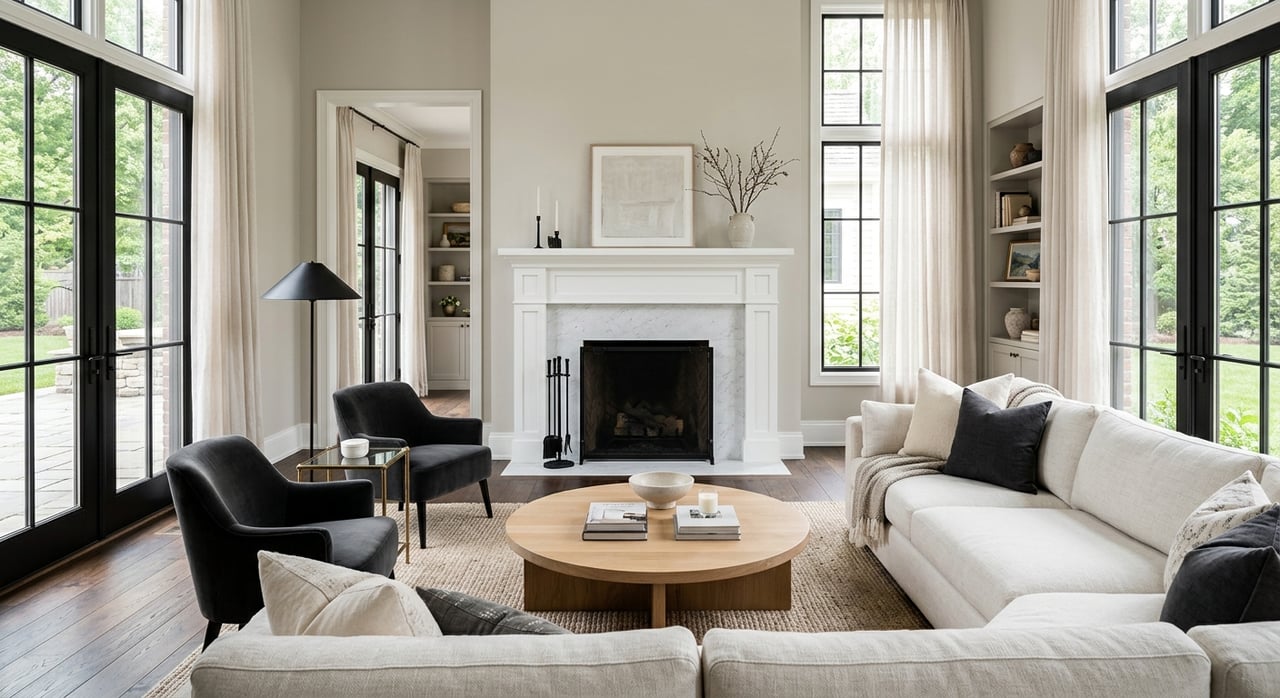
Presentation shapes how buyers feel before they ever step through the door. For many shoppers, the first showing happens online, and first impressions are fast. If your home looks bright, spacious, and easy to picture living in, buyers are more likely to book a tour and make a stronger offer.
National staging research supports that idea. In NAR’s 2025 Profile of Home Staging, 83% of buyers’ agents said staging made it easier for buyers to visualize the property as a future home. The same report found that 29% of agents said staging increased the dollar value offered by 1% to 10%, and 49% of sellers’ agents said staging reduced time on market.
That does not mean every home needs a major makeover. It means thoughtful preparation can improve how buyers interpret your space, condition, and value. In a balanced market, that edge matters.
If time or budget is limited, focus on the spaces buyers notice most. According to NAR, the most commonly staged rooms are the living room, primary bedroom, dining room, and kitchen. Those are often the rooms that shape a buyer’s overall impression of the home.
A practical prep plan usually starts with the basics:
NAR also reports that the most common recommendations from sellers’ agents were decluttering, whole-home cleaning, and curb appeal improvements. These are often the highest-impact steps because they help your home feel cared for and easier to understand.
In Malvern, your presentation should also reflect what makes the location valuable. If your home is near the borough center, buyers may respond to a clear sense of walkability and convenience. If your property has historic details, mature landscaping, or easy access to SEPTA rail or bus connections, those features should be photographed and described thoughtfully.
This is not about overselling lifestyle. It is about helping buyers understand the practical value your location offers. In a compact borough with a defined downtown and commuter access, those details can support stronger interest.
Professional photos are not just a nice extra. They are one of the most important parts of your launch. NAR’s 2025 buyer research found that among buyers who used the internet, 83% rated photos as very useful, 57% said the same about floor plans, 41% about virtual tours, and 29% about videos.
The same research found that 51% of buyers found the home they purchased on the internet. That means your online presentation does a lot of the heavy lifting before a showing is ever scheduled. Strong images can increase clicks, showings, and perceived value.
Good photography starts before the photographer arrives. Clean surfaces, open blinds, fresh lighting, and carefully edited rooms can make a major difference. If your home feels bright, calm, and functional in photos, buyers are more likely to see it as worth the asking price.
Photos usually lead the way, but floor plans and virtual tours can add clarity. Floor plans help buyers understand flow, room relationships, and scale. Virtual tours can help out-of-area buyers or busy local buyers decide whether to prioritize your home quickly.
These tools work best when the home is already well prepared. They should reinforce a clean, accurate impression, not distract from a home that needed more work before launch.
Virtual staging can be a smart option for vacant homes or spaces that are hard to furnish. It can help buyers picture how a room might function and keep online photos from feeling cold or empty. In some cases, that can improve interest without the cost of full physical staging.
But there is an important rule: digitally altered images should be disclosed clearly so buyers are not misled. If a room has been virtually furnished or edited, that should be transparent. The goal is to help buyers visualize the space, not create confusion.
A smoother sale often starts with better paperwork. In Pennsylvania, sellers must provide a signed and dated property disclosure statement before the agreement of transfer is signed. The form covers a wide range of topics, including the roof, basement or crawl space, pests, structural issues, additions or remodeling, water and sewage systems, plumbing, heating and air conditioning, electrical systems, appliances, drainage, boundaries, hazardous substances, HOA matters, and legal or title issues.
Pennsylvania law also requires sellers not to make false or misleading statements and to disclose known material defects. That is one reason it helps to gather your information early rather than scrambling once a buyer starts asking questions. Better preparation can reduce stress and keep the transaction moving.
Before photos and launch, it helps to assemble:
This kind of prep can make your listing feel more buttoned-up from the start. It also gives you stronger, faster answers when buyers ask for details during showings or negotiations.
If your home was built before 1978, there are additional federal lead-based paint disclosure requirements. Sellers must provide the required disclosure, share available records and reports, include the warning statement, provide the EPA pamphlet, and allow buyers a 10-day opportunity for an inspection or risk assessment.
For older homes in and around Malvern, this is worth checking early. Age-specific disclosure steps are easier to handle before your listing goes live than after a buyer is already at the table.
The strongest sale plans usually combine three things: accurate pricing, polished presentation, and complete preparation. When those pieces line up, buyers are more likely to see your home as well cared for, properly valued, and worth acting on. That can support stronger interest and a smoother path from listing to settlement.
In Malvern, where local nuance matters, details count. A tight comp strategy, thoughtful staging, strong photography, and organized disclosures can help your home stand out for the right reasons. If you want a plan that reflects your home, your timing, and your goals, the Anne Townes Team can help you prepare with clarity and confidence.
Stay up to date on the latest real estate trends.


Dedicated to delivering personalized service, local market expertise, and a seamless real estate experience, our team is here to guide you through every step of the buying or selling process. We focus on clear communication, strong negotiation, and trusted support to help you achieve your real estate goals with confidence and peace of mind.