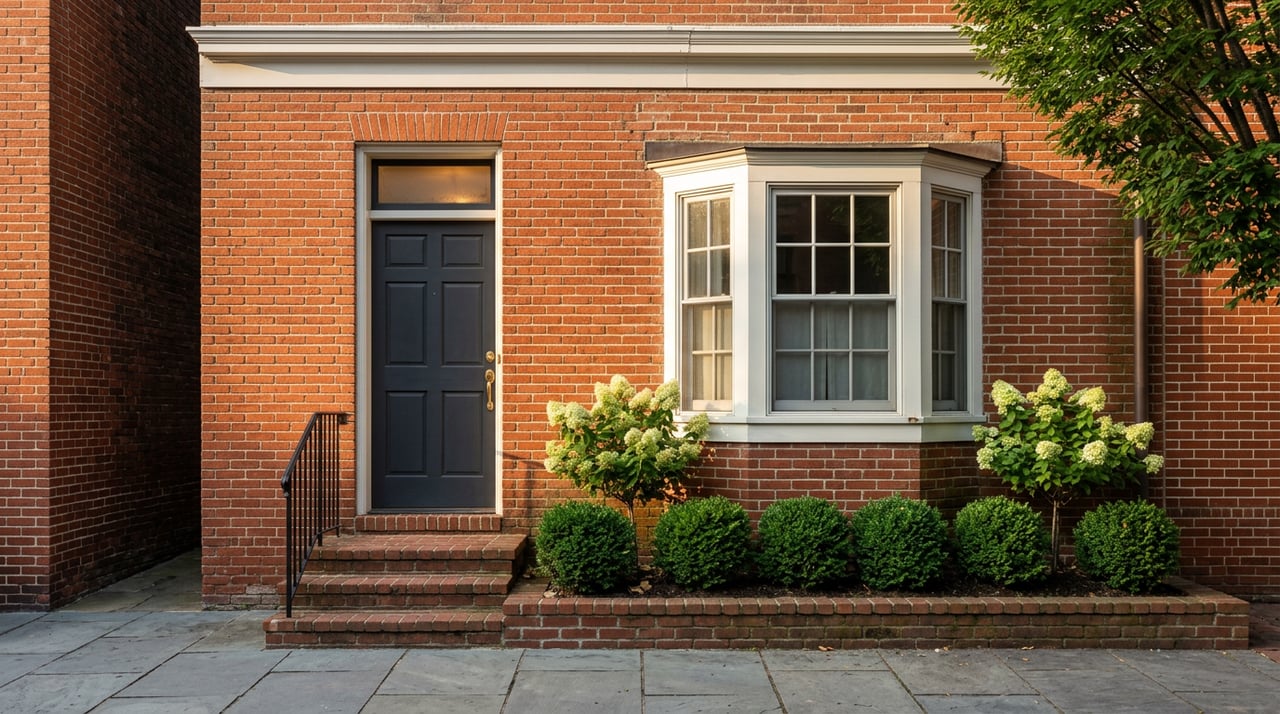
West Chester Borough Property Taxes vs Home Prices: Compare Ownership Costs
August 13, 2026
August 13, 2026
Which house costs more to own every year: a $750,000 rowhome inside West Chester Borough, or a $650,000 colonial ten minutes away in West Goshen Township? Most buyers assume the cheaper house wins on taxes too. In this district, that assumption is often backwards, and the reason has nothing to do with the price tag on either home.
Search "West Chester home prices" and you'll find the borough's average sale price climbed above $700,000 in 2025, well ahead of the county's median. That number gets buyers thinking about their offer. It rarely gets them thinking about their tax bill, because most people assume price and tax bill move together in a straight line. In Chester County, they don't, because the tax bill isn't built on the sale price at all. It's built on the assessed value, and in Chester County that assessed value can sit at roughly a third of what the home is actually worth on the open market. The West Chester Area School District's own budget documents show the average assessed home value on the Chester County side of the district running around $189,850, which the district itself describes as approximately 35 percent of market value. Cross into the Delaware County side of the same district, and that ratio jumps to roughly 85 percent. Same school district, different county-side assessment starting points for what gets multiplied.
That gap is also why Delaware County households in the district just absorbed a steeper increase than their Chester County neighbors. When the state's Tax Equalization Board updated market values this year, it found an 8.2 percent gain on the Chester County side and a 12.9 percent gain on the Delaware County side, and the district's board was blunt that this shift moved a larger share of the tax burden onto Delaware County homeowners. A buyer weighing a Chester County address against a Delaware County one inside the same district is not comparing two identical tax experiences. They're comparing two different assessment systems wearing the same school district name.
Here's the part that surprises people who've already shopped Coatesville, Kennett Square, or Owen J. Roberts territory. The West Chester Area School District just approved a $344,989,797 budget for 2026-27, and the board raised its real estate tax rate to 24.16 mills for the Chester County side of the district, up from 23.38 mills the year before. Despite that increase, the district's own announcement states its rates "remain the lowest in both Chester County and Delaware County." Compare that to the Coatesville Area School District, which carries a rate closer to 44 mills, nearly double, or Owen J. Roberts at roughly 36 mills. The district covering some of the county's most expensive real estate is taxing at a rate that would look modest almost anywhere else in the region.
This isn't a story about a school district spending less. A $345 million budget is not a lean one. It's a story about a large, high-value tax base spreading a large budget thin enough that the rate applied to any single home stays low, even as the total dollars collected stay high. For a buyer, the practical takeaway is that the rate itself isn't punishing you for choosing this district. What determines your actual bill is the assessed value the county has on file, not the number on the sale contract.
On the Chester County side of West Chester Area School District, the school tax layer is fixed. What still moves is the municipal layer, and it moves more than most buyers expect between towns that feel interchangeable on a map.
| Tax layer | Rate | Applies to |
|---|---|---|
| Chester County (flat) | 5.164 mills | Every property in the county |
| WCASD school tax (current) | 24.16 mills | Every property in the district, Chester County side |
| Westtown Township municipal (most recently published) | 3.92 mills | Westtown Township only |
| West Goshen Township, combined (recently reported) | approximately 43.76 mills | West Goshen Township, all layers combined |
Add up Westtown's most recently published township rate with the flat county rate and the current school rate and the total lands around 33.2 mills. West Goshen's combined figure, drawn from the same reporting, runs closer to 43.76 mills. That's a gap of roughly ten mills between two townships feeding the identical school district. Two buyers who each fall in love with a home assessed at the same value, one in Westtown and one in West Goshen, are not choosing between similar carrying costs just because both towns share a mailing address near West Chester. They're choosing between two different municipal tax structures layered on top of one shared school rate.
Borough-only sales data moves in ways that county-wide data doesn't, and the reason is simple. West Chester Borough is small, and in a given month it doesn't take many closed sales to swing a median. One dataset showed just 5 recorded sales in the borough for March 2026, down from 8 the year before, alongside a reported 24 percent year-over-year drop in median price. That's not a market correction. That's what happens when a median gets calculated from a handful of transactions instead of hundreds. A buyer who sees a single alarming month of borough data and either panics or gets excited is reacting to sample size, not to demand. The more dependable signal is the trend across several months and the price-per-square-foot figures, which multiple sources place in the $330 to $360 range and rising, alongside days-on-market figures showing well-priced borough homes still going under contract within 10 to 20 days.
None of this means the borough premium is imaginary. It buys something specific, and it's worth naming instead of waving at. Four blocks of Gay Street close to vehicle traffic every weekend from May through September for the Gay Street Open-Air Market, letting restaurants spill tables into the street. Every Wednesday between Memorial Day and Labor Day, participating restaurants run West Chester TAPS, a borough-wide happy hour with discounted beer, wine, and appetizers. Walk that stretch on any given evening and you'll pass Stove & Tap, Sedona Taphouse, Dim Sum Taste, LaScala's Fire, West Chester Seafood Kitchen inside the Hotel Indigo building, and Side Bar, all within a few blocks of each other. The core is also still changing. As of early 2026, the building that once housed Iron Hill Brewery, itself built on the old Woolworth's site, was being actively marketed to new restaurant and brewery operators after Iron Hill's chain-wide closures. That's a walkable core still in motion, not a finished product, which is a different thing to buy into than a static list of restaurants that existed five years ago and might not exist tomorrow.
The math that actually matters for a specific house is not available on a listing page. It requires pulling the current assessed value from Chester County's assessment office, applying the county's flat 5.164 mill rate, the district's current 24.16 mill rate, and the specific township's own municipal rate, which you can typically find directly on that township's tax page. Two homes priced within $50,000 of each other in different townships inside the same school district can carry annual tax bills that differ by real money once you run this, not because one town is better funded than the other, but because the municipal layer is set independently by each local government.
If the school tax rate is the lowest in two counties, why does my estimated tax bill still look high? Because the rate applies to your assessed value, and a $700,000 home in this district still generates a meaningful assessed value even at a low rate. Low rate and low bill are not the same thing when the base underneath it is large.
Why did homeowners on the Delaware County side of the district see a bigger increase than Chester County homeowners this year? The state's equalization board found faster market value growth on the Delaware County side, 12.9 percent versus 8.2 percent in Chester County, and district policy requires shifting the tax burden to reflect that.
Does switching townships inside the same school district actually change what I pay? Often, yes. On the Chester County side, the school layer stays fixed across the district, while the municipal layer is set town by town, and the gap between neighboring townships can run into the double digits in mills.
If you're comparing towns inside this district and want the actual carrying cost run for a specific address before you write an offer, that's a conversation the Anne Townes Team has with buyers regularly. Reach out and we'll walk through the real numbers with you, not just the ones on the listing page.
This article is general information, not legal, tax or financial advice. Consult a qualified professional about your situation.
Stay up to date on the latest real estate trends.


Dedicated to delivering personalized service, local market expertise, and a seamless real estate experience, our team is here to guide you through every step of the buying or selling process. We focus on clear communication, strong negotiation, and trusted support to help you achieve your real estate goals with confidence and peace of mind.