The Buried Oil Tank Question in Wayne’s Older Homes
August 20, 2026
August 20, 2026
Pennsylvania's standard seller disclosure form asks a direct question about underground tanks. Flagstone says a seller who genuinely doesn't know the answer is allowed to write "not known," and that answer is not a lie. It's also not particularly useful information for the person reading it, because the form was built to capture what a seller knows, not what's actually buried in the yard. For a Wayne seller with a home built before 1970, that gap between disclosed knowledge and physical reality is where deals lose weeks they don't have.
Local market data puts roughly one in five Wayne homes at pre-1940 vintage, with another four in ten built between 1940 and 1969. Add those together and you get a majority of the town's housing stock old enough to have started life on oil heat, decades before natural gas lines reached most of the Main Line. North Wayne and South Wayne, both listed on the National Register of Historic Places, were built out mainly between the 1870s and 1910s. Louella Court's homes date from the late 1800s through the 1930s. These aren't edge cases in Wayne's inventory. They're a large share of what's actually for sale.
Pennsylvania's Real Estate Seller Disclosure Law requires sellers to disclose known material defects, and the standard form asks specifically whether the seller is aware of underground tanks or hazardous substances on the property. That's a reasonable ask for someone who installed a tank, converted their own heating system, or watched a contractor pull one out five years ago. It's a much harder ask for someone who bought a hundred-year-old house from an estate, or inherited a property where the last documented fuel conversion happened before anyone alive remembers it.
Environmental liability on a buried tank runs with the property, not with whoever happened to own it when the tank went in the ground decades ago. A seller can answer the disclosure form honestly and still hand a buyer a problem neither of them knew existed. It does not establish whether a tank is present or whether the soil is contaminated.
There's a structural reason this particular question is harder to answer honestly in Wayne than it would be in a newer development. Pennsylvania's Department of Environmental Protection maintains a registry of regulated storage tanks, but that registry explicitly excludes home heating oil tanks. There is no public database a seller, buyer, or agent can check to confirm whether a specific address ever had one. The only ways to find out are a documented removal record, a visible fill pipe or vent pipe on the property, or a physical sweep of the ground.
Pennsylvania does run a reimbursement program for heating oil tank cleanup, and it's worth understanding exactly what it covers, because it's easy to mistake it for a safety net that applies earlier in the process than it actually does. The program pays for cleanup after a release has already occurred, not for finding out whether a tank exists in the first place.
To qualify, the tank has to be underground, hold 3,000 gallons or less, and have released heating oil on or after January 30, 1998. The Pennsylvania Department of Environmental Protection says the owner covers the first $1,000 of eligible costs, and the program covers what's left, up to $4,000 per tank. Funding comes from the state's Underground Storage Tank Indemnification Fund, which makes up to $750,000 available each year through December 31, 2027, on a first-come, first-served basis.
That's a genuinely useful backstop if contamination turns up. It's also structured entirely around confirmed problems. Nothing about the program rewards a seller for testing before listing The paperwork records what a seller knows; what happens next often depends on when the uncertainty is resolved.
Here's where the gap actually costs money and time. Mortgage lenders, particularly on FHA, VA, and many conventional loans, routinely require proof of tank removal or a clean environmental assessment before they'll fund a loan on a property with a known or suspected underground tank. A "not known" answer on the disclosure form doesn't satisfy that requirement. It just means the underwriter now has an open question they need someone to close, usually during the exact window when a buyer's financing contingency is running.
Removing a clean underground tank typically runs somewhere between $1,000 and $3,000, depending on tank size, soil access, and local permit fees. If contamination shows up once the tank is out, the number changes entirely. Soil remediation on its own can run from a few thousand dollars into the tens of thousands, and industry cost guides put leak remediation in the range of $2,500 to $17,000 depending on how far the contamination has spread. A cash buyer can waive the financing contingency and take on that risk directly. Most buyers can't, or won't.
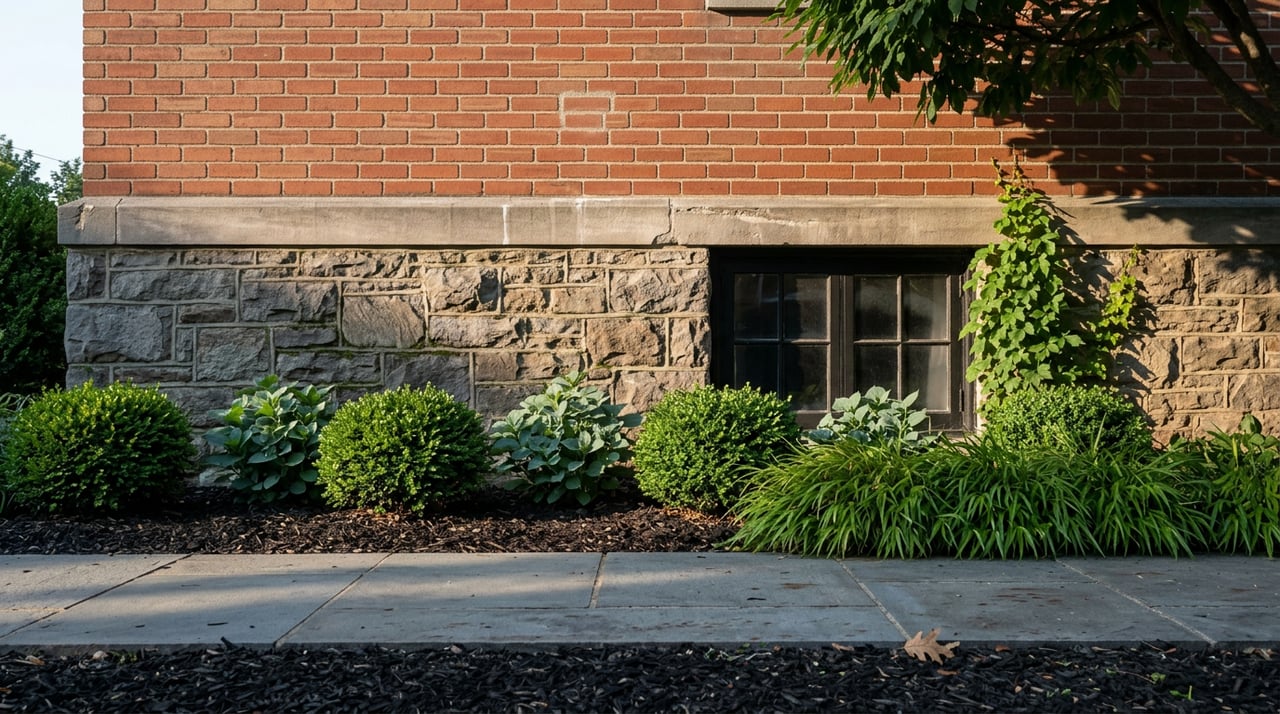
None of this needs to surface for the first time during a home inspection with an offer already on the table. A property inspector can spot the physical signs of a tank system: a fill pipe or vent pipe protruding near a foundation, an unexplained depression in the lawn, capped lines in a basement or root cellar. In homes with stone foundations from the 1900s and 1910s, those signs are sometimes harder to read, since so much has been buried, patched, or built over across a century of ownership.
A magnetometry sweep, run before the home ever goes on the market, generally costs somewhere in the $250 to $500 range and gives a seller documentation either way. If nothing is there, that documentation removes the question from every future disclosure conversation. If something is there, the seller now has a removal quote in hand before a buyer's attorney or lender forces the issue on a shorter timeline.
This paperwork matters more to an underwriter than it does to a disclosure form, because underwriters aren't looking for good faith. They're looking for paperwork that closes the question.
For a seller in North Wayne, South Wayne, or Louella Court preparing to list a home built in that first wave of Main Line development, that paperwork is worth having before a buyer's inspector finds the fill pipe first. The tank itself, if one exists and it's clean, is a manageable cost. The uncertainty around whether one exists at all is the part that stalls closings.
Why might a seller remove an underground oil tank before selling? Financing and buyer expectations often push toward removal anyway.
What if the seller genuinely doesn't know whether there's a tank? "Not known" is a legitimate response on Pennsylvania's disclosure form when the seller has no actual knowledge. It doesn't tell a buyer or their lender anything about the physical condition of the property, which is why a documented sweep carries more practical weight than the disclosure answer itself.
Will a buyer's lender accept a "not known" disclosure and move forward with financing? It depends on the lender and loan type, but many FHA, VA, and conventional underwriters ask for documentation beyond the disclosure form once a tank question is flagged, whether that's a clean sweep report or a completed removal record. A seller who has that documentation ready avoids the delay of producing it mid-contract.
If you're preparing to list a historic Wayne home, or you're under contract on one and a tank question just surfaced, the Anne Townes Team has walked this exact conversation with sellers across Radnor Township's older housing stock. Reach out before you list, or the moment an inspection raises the question, and we'll help you figure out what documentation actually moves your closing forward.
This article is general information, not legal, tax or financial advice. Consult a qualified professional about your situation.
Stay up to date on the latest real estate trends.









Dedicated to delivering personalized service, local market expertise, and a seamless real estate experience, our team is here to guide you through every step of the buying or selling process. We focus on clear communication, strong negotiation, and trusted support to help you achieve your real estate goals with confidence and peace of mind.