The Six-Township Problem Hiding in Every Chester Springs Well and Septic Inspection
August 27, 2026
August 27, 2026
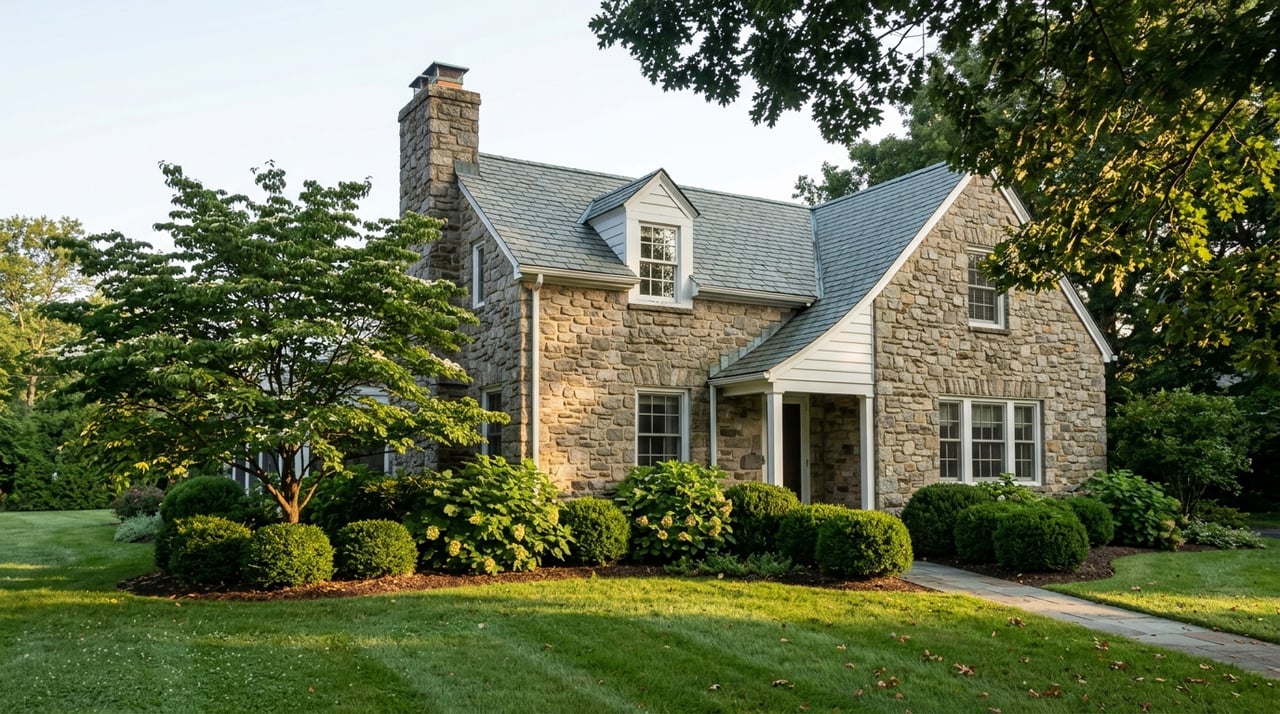
Two homes sit less than a mile apart on the corridor where South Chester Springs Road meets Conestoga Road. Same rolling pasture views, same stone-and-fieldstone character, same general price range. One seller's septic system needs a certified inspection before the township will sign off on the sale. The other doesn't, because the house next door is connected to public sewer and its township requires no resale certification at all.
Nothing about the driveway or the mailbox tells you which house you're looking at. The difference is a line on a municipal map that has nothing to do with the address on the listing.
That's the reality of buying or selling in Chester Springs. It isn't a town with a single set of rules. It's an unincorporated community that spans six separate townships, West Pikeland, Charlestown, Upper Uwchlan, Wallace, East Nantmeal, and West Vincent, and each one writes its own ordinance for how water and sewage get handled at the point of sale. A buyer who assumes "Chester Springs" means one set of requirements is going to be surprised at least once during the transaction.
The Chester Springs ZIP code covers far more ground than the historic village center, and the paperwork obligations attached to a given parcel depend entirely on which township drew the line around it. Pennsylvania doesn't help here. There is no statewide law requiring a point-of-sale septic inspection. The state leaves that decision to individual municipalities, and dozens of townships across the commonwealth, including several inside the Chester Springs footprint, have adopted their own ordinances requiring one.
That means a septic or well condition you'd expect to be standard across the village might apply on one side of a farm field and not the other. Before you write an offer or accept one, the first question worth answering isn't "does this house have well and septic," it's "which township's ordinance governs this specific parcel."
Where a septic system exists, Pennsylvania's Act 537 governs its oversight, and the Chester County Health Department is the agency responsible for enforcing it. The department issues permits for new on-lot sewage systems and private water supply wells, and it steps in when a system falls out of compliance. What it does not do is mandate a septic inspection every time a house changes hands. That obligation, again, comes from the township, not the state.
A licensed inspector performing a real Pennsylvania septic evaluation does more than lift the tank lid and look inside. The process typically includes locating and fully pumping the tank, checking the interior for cracks in the walls and baffles, measuring the sludge and scum layers to see how well the system has been maintained, and evaluating the drain field for standing water or unusually green patches that signal the absorption area is struggling. Some inspectors run a hydraulic load test, flushing a large volume of water through the system to see whether the drain field can actually handle household demand. On older properties, especially the farmhouses and converted barns scattered through this part of the county, tanks from the 1960s and 1970s sometimes lack risers or visible markers, and the inspector has to probe the yard to find them.
Township ordinance or not, financing has its own rules, and they apply uniformly. FHA and VA loans almost always require a septic inspection as a condition of approval, regardless of whether the local municipality mandates one for resale. The same is true for well water. Lenders typically require a well certification confirming that the system can deliver at least 100 gallons per bedroom, plus 100 gallons within a two-hour window, which for a four-bedroom house works out to roughly 4.2 gallons per minute sustained for two hours. If the well can't hit that number, the loan doesn't close until it can.
Water quality testing usually rides along with that certification: coliform bacteria, nitrates, and in Chester County's case, radon in water as well. The EPA and Pennsylvania DEP classify all of Chester County as Zone 1, the highest radon potential category in the state's rating system, which is one more reason lenders and inspectors treat the water test as non-negotiable rather than optional.
Here's the quiet part. None of this is being tested for you on any recurring basis while you live there. The state doesn't regulate or test private wells directly. If you're buying a well-served home in Chester Springs, the transaction inspection may be the first real look that system has had in years.
Costs vary by scope and by which company you use, but the ranges are consistent enough across Southeast Pennsylvania to plan around.
| Service | Typical cost | Notes |
|---|---|---|
| Standard home inspection | Starting around $399 | Condos often start lower |
| Septic inspection | $450 to $1,750 | Higher end includes full tank pump-out and dye testing |
| Well flow and water quality testing | Bundled with inspection or priced separately | Often required by lender regardless of township rule |
| New septic system installation | $18,000 to $50,000+ | Driven heavily by soil conditions |
| New well drilling | $5,000 to $15,000+ | Varies by depth and geology |
In most Pennsylvania real estate transactions, the buyer pays for the septic and well inspections as part of due diligence. If a system fails, the negotiation that follows, credit, repair, or price adjustment, is where local knowledge starts to matter more than the inspection report itself.
West Vincent Township, which covers a meaningful piece of the Chester Springs footprint, illustrates the split perfectly. Bucks County Water and Sewer Authority provides public water and sewer service to most of the township, and West Vincent's own site states plainly that no sewer certification is required for resale in those areas. Homeowners there skip an entire category of pre-closing paperwork that a buyer two townships over would have to clear.
But "most of the township" isn't "all of it." Some developments within West Vincent still rely on private wells and on-lot septic, and those parcels carry the full inspection and certification burden despite sharing a township name with houses that carry none of it. You can't tell which category a specific address falls into without asking the township directly or having someone who already knows pull the answer for you.
Chester County's housing market has not been forgiving of delay this year. The county's median sale price ran around $623,000 for the four weeks ending August 9, 2026, up close to 4 percent from a year earlier, with homes averaging about 21 days on market and roughly 2.7 months of supply countywide. That's a market where a well flow test that comes back low, or a septic drain field that needs a repair permit before closing, doesn't just cost money. It costs the leverage that comes from moving at the pace the rest of the market is moving.
The pressure isn't theoretical for Chester Springs specifically, either. West Vincent Township's supervisors are currently reviewing preliminary plans from Toll Mid-Atlantic to build 46 single-family homes across roughly 185 acres fronting South Chester Springs Road and Conestoga Road, the same corridor where our two hypothetical houses sit. New construction of that scale means new water and sewer infrastructure decisions get made from scratch, while the older housing stock around it keeps operating under whatever well and septic arrangement it has had for decades. The contrast between old system and new system, and between township and township, isn't going away. If anything, it's about to get more visible as that project moves through approvals.
Does every home in Chester Springs have well and septic? No. It depends on the township and, within some townships, on the specific development. Public water and sewer coverage exists in parts of West Vincent through Bucks County Water and Sewer Authority, while other parcels nearby remain fully private.
Who typically pays for the septic and well inspections? In most Pennsylvania transactions, the buyer covers these as part of due diligence, though this is negotiable in the offer.
What happens if the septic system fails inspection? Repairs range from minor fixes, like a drain cap or a pump and haul, to full system replacement in cases of poor soil conditions or age-related failure. The path forward usually gets worked out through a credit, a price adjustment, or a pre-closing repair, depending on the scope.
Does a septic or well issue always delay closing? Not always, but it can, especially if soil testing or a permit application is required. Scheduling for that kind of testing with the local health department can take one to four weeks, which is worth building into your timeline the moment an inspection flags a concern.
If you're buying or selling in Chester Springs, the township line matters as much as the school district line or the property line. Knowing which set of rules applies to a specific house before you write the offer, or before you list it, is the difference between a closing that moves on schedule and one that stalls over a requirement nobody flagged until week three.
Anne Townes Team works this corridor regularly and can tell you, parcel by parcel, which township rules apply before you're locked into a timeline. Contact us to talk through your specific address.
Stay up to date on the latest real estate trends.






Dedicated to delivering personalized service, local market expertise, and a seamless real estate experience, our team is here to guide you through every step of the buying or selling process. We focus on clear communication, strong negotiation, and trusted support to help you achieve your real estate goals with confidence and peace of mind.